
The Hero Behind the Mask:
The Loss of Identity in Modern Superhero Narratives
The Hero Behind the Mask is a critical examination of superhero storytelling through the lens of identity — not secret identities as plot devices, but the deeper, human selves that give these characters meaning. From Superman and Batman to Spider-Man, Captain America, and beyond, the book argues that superheroes endure not because of their powers or iconography, but because of the people beneath the masks. When that humanity is honored, the genre resonates across generations. When it is forgotten, even the most iconic heroes begin to feel hollow.
Drawing on nearly a century of comics history, this book traces how the “hidden self” — the civilian identity, moral core, and emotional life of the hero — has gradually been overshadowed by spectacle, continuity management, and brand-driven storytelling. Through close readings of key eras, creators, and storylines, it explores how modern superhero narratives increasingly prioritize lore, events, and escalation over character, often flattening complex figures into symbols rather than people.
The book examines both successes and failures across publishers and decades, from the character-centered storytelling of creators like Mark Waid and Jeph Loeb to the lore-heavy approaches that have come to dominate modern comics. It looks at the erosion of supporting casts, the disappearance of quiet issues, and the industry’s growing reliance on crossover events — not as isolated problems, but as interconnected symptoms of a genre drifting away from its emotional foundations.
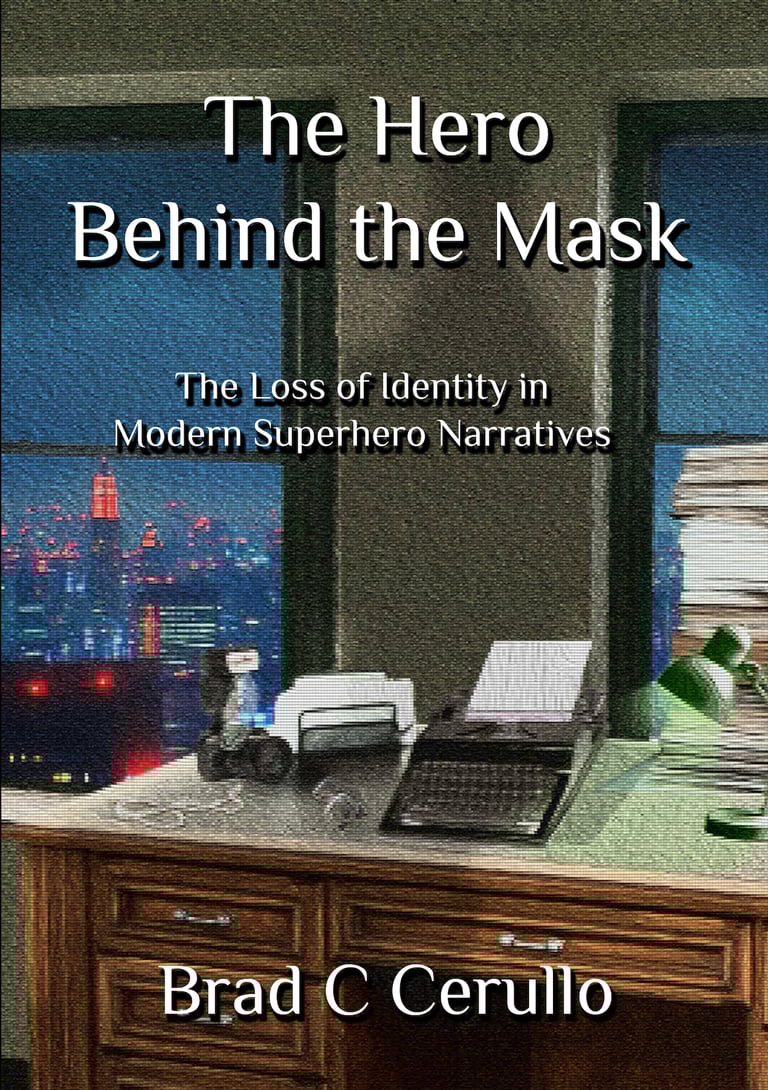
Importantly, The Hero Behind the Mask is not a nostalgic lament for a vanished past. Instead, it offers a constructive framework for understanding why certain stories endure and how the genre can reclaim its strength. Through discussions of legacy, supporting characters, and the power of stillness in storytelling, the book outlines practical, creative pathways forward — showing how modern comics can honor timeless principles without rejecting contemporary contexts.
Written for readers who love superhero stories but sense something essential has been lost, this book speaks to longtime fans, scholars of popular culture, and anyone interested in how myth, identity, and storytelling intersect. At its core, The Hero Behind the Mask makes a simple but urgent case: superheroes matter most not when they are larger than life, but when they remind us of the lives beneath the masks — and, in doing so, reflect something true about ourselves.
Book Details
Title: The Hero Behind the Mask: The Loss of Identity in Modern Superhero Narratives
Author: Brad C. Cerullo
Format: Paperback, Hardcover, Ebook
Page Count: 202 pages
Publisher: Party Tree Productions
Publication Date: January 2026
ISBN (Paperback): 9798279095759
ISBN (Hardcover): 9798279252152
ASIN (Ebook): B0GD4YSMN4
Language: English
Genre: Comics Studies, Popular Culture, Media Criticism
Audience: Adult / Young Adult (16+)
Categories: Superhero Studies · Comics Criticism · Popular Culture
About the Artist
Tony Semekis is a longtime friend and creative collaborator of the author. A lifelong fan of comics and visual storytelling, Tony brings both passion and formal training to his work as a graphic designer. His approach blends an understanding of iconic superhero imagery with a strong grasp of composition, typography, and visual narrative.
Tony is a credited and formally educated designer, and a former member of the Artists’ Guild at Command D, a creative community that has included professionals such as Sean Murphy of DC Comics fame. His cover artwork for The Hero Behind the Mask reflects a deep respect for the genre’s history while visually reinforcing the book’s central theme: the tension between the mask and the humanity beneath it.



Coming Soon
A forthcoming critical study will examine the adaptation of J. R. R. Tolkien’s legendarium across film and television. The work analyzes how Tolkien’s narrative structures, thematic concerns, and philosophical foundations have been interpreted, reshaped, and, in some cases, constrained by the demands of visual media.
Drawing on adaptation theory, film history, and close textual comparison, the study situates each major adaptation within its cultural, industrial, and historical context. Particular attention is given to questions of fidelity, authorship, and the tension between literary mythmaking and modern franchise filmmaking.
Additional information will be made available upon completion of the manuscript.
© 2026. All rights reserved.